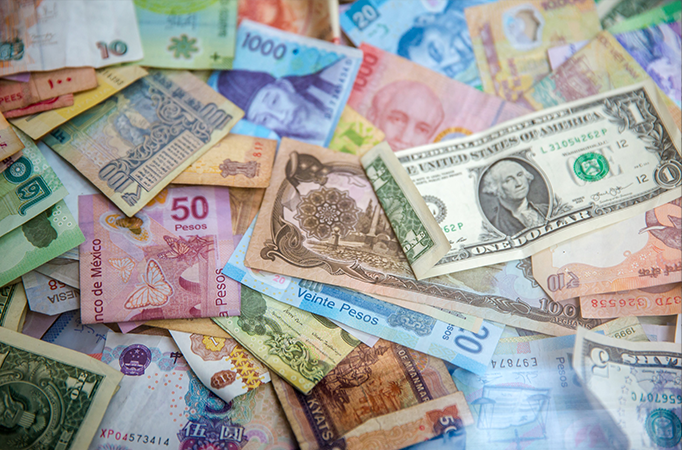

Russian President Vladimir Putin has been taking a tough line on the Dollar. He has been claiming that western foreign policy, sharped in no small part by the United States, is to blame for the rising commodity and Dollar prices globally. Even citing recent IMF figures for the Dollarisation of global foreign exchange reserves, Putin appeared to take aim at the role of the Dollar as the kingpin of global reserves. Unsurprisingly given the European Union’s role in the sanctions levied on Russia following the invasion of Ukraine, the President focussed on the role of the Euro in those reserves too.
Putin’s argument was that in a post-pandemic post-invasion world, it was physical goods that are holding a value, not money. His rather archaic and feudal view of the global economic would see governments stockpile commodities, hard and soft hoarding everything from food to oil rather than money. Of course, this would serve the President’s own ends as a significant benefactor of global commodity export and with the Ruble as an incredibly small player in the global reserve market. The announcement was in no small part also motivated by the US’s confiscation of Russia’s reserves.
The discussion regarding the composition of foreign exchange reserves is often a debate that includes China at the centre of it. China is one of the world’s largest holders of US treasuries and US Dollars in its national reserves by volume. Frequently over recent decades it has been public about its dissatisfaction with the reliance upon US Dollars in global reserves. It was one of the catalysts behind the emerging trend to hold Euros in more significant volumes within reserves.
China’s Xi Jinping and Vladimir Putin will have something to talk about then when they meet for the first time following the invasion of Ukraine. Pressure has been applied to China as well as Russia from US foreign policy as of late. The two will meet later this month at the Shanghai Cooperation Organisation’s summit in Uzbekistan in one weeks’ time. This geopolitical alliance is one that markets will continue to keep an eye on not least just for the potential coordinated rhetoric/action on Dollar reserves but for its significance to global supply chains also.
Discussion and Analysis by Charles Porter

Click Here to Subscribe to the SGM-FX Newsletter

Related Insights

Daily Brief – Defiance
 Charles Porter
Tue 12 May 2026
Charles Porter
Tue 12 May 2026
Defiance Yesterday’s market was defying one of two things: logic or gravity. Come to think of it, perhaps both. Take cable, GBPUSD, yesterday. The key events beyond minor data releases centred around any chatter from either side of the Iranian conflict and Starmer singing for his supper. Sing he did and tweet the President did, […]

Daily Brief – A technicality
Charles Porter
Thu 25 Jun 2026
A technicality Markets appeared to be fatigued by Trump’s Iran war before a ceasefire had even been agreed. This was evident from pricing that would have been considered complacent should the conflict have dragged on longer than it ultimately did. Now, that saga is far from over – it’s inevitable, for example, that as the […]
Daily Brief – Short-lived relief rally
Charles Porter
Tue 19 May 2026
Short-lived relief rally A tantrum in the bond market has continued to erode away at risk conditions in recent sessions. In the UK, the sell-off in gilts and corporate bonds has been particularly acute thanks to heightened political instability, the origins of which we have covered thoroughly in recent briefings. Yesterday, headlines delivered enough optimism […]